
Is Zoom HIPAA compliant? What you need to know about your tech systems for private practice
If you are a therapist or healthcare provider offering telehealth, you have probably asked yourself this question at some point: Is Zoom actually HIPAA compliant
Not because you are careless. But because the answers online are often confusing, contradictory, or buried under technical language that does not reflect the reality of private practice.
You may already be using Zoom every week. It is familiar. Your clients know how to use it. And yet there is often a quiet layer of uncertainty underneath it all. Am I doing this correctly. Am I putting my clients or my practice at risk without realizing it.
The truth is that Zoom can be HIPAA compliant, but only under very specific conditions. And understanding those conditions is what allows you to move from constant second guessing into confidence.
This guide explains the real answer, what actually matters for compliance, and how I recommend therapists approach telehealth systems without carrying unnecessary stress.
If you are new here, I am Natalia Maganda. I am a web designer and SEO strategist who supports therapists and healthcare providers who are done carrying the weight of their entire practice on their nervous system.
I specialize in building websites for therapists and integrated systems that allow your practice to feel steady, professional, and trustworthy without you having to become a tech expert or spend your evenings second guessing your setup. My work sits at the intersection of ethical marketing, secure systems, and sustainable growth, so your visibility supports your capacity instead of draining it.
The short answer most therapists are actually looking for
Zoom is not automatically HIPAA compliant.
It can be HIPAA compliant when you are using the correct version of Zoom and have configured it intentionally. This is where many clinicians get tripped up. Payment alone does not equal compliance. Familiarity does not equal compliance. And good intentions are not enough on their own.
HIPAA compliance depends on both the platform you are using and how it is set up within your broader systems.
Once you understand that distinction, the rest becomes much clearer.
When Zoom is not HIPAA compliant
Zoom is not HIPAA compliant in the following situations:
- You are using a free or standard Zoom account
- You do not have a signed Business Associate Agreement
- Default security settings are left unchanged
- Cloud recordings are enabled without safeguards
- Meeting access is not controlled intentionally
These are common scenarios, especially for clinicians who adopted telehealth quickly and were never given proper guidance on how the systems should work together.

What actually makes Zoom HIPAA compliant
Zoom becomes HIPAA compliant when it is used through Zoom for Healthcare and supported by a signed Business Associate Agreement. The BAA is what legally confirms that Zoom will safeguard protected health information in accordance with HIPAA requirements.
Beyond the BAA, compliance also depends on security settings, encryption, and how data is stored and accessed. This is why Zoom created a healthcare specific offering rather than expecting clinicians to piece this together on their own.
If you want a deeper explanation of how Zoom for Healthcare works, how it differs from regular Zoom, and how it fits into a calm telehealth setup, I break this down in detail in my guide:
Zoom for Healthcare explained
and what I recommend for HIPAA compliance and website systems.
That post covers the platform itself. This one focuses on decision making and systems.
Do therapists need Zoom for Healthcare specifically
For most therapists offering telehealth in private practice, the answer is yes.
Zoom for Healthcare is designed to support clinical work ethically and responsibly. It removes ambiguity around compliance and provides the infrastructure needed to protect client privacy.
There may be situations where other HIPAA compliant telehealth platforms are appropriate, especially in specific medical settings. But if you are choosing Zoom because it is familiar, flexible, and client friendly, then Zoom for Healthcare is the version that aligns with professional standards.
Common mistakes therapists make when using Zoom
One of the biggest mistakes clinicians make is assuming that Zoom is the only compliance decision they need to make.
Another is believing that paying for a healthcare license automatically handles everything.
And one of the most overlooked issues is forgetting that telehealth compliance does not stop at the video call.
Your website.
Your scheduling system.
Your discovery calls.
Your intake forms.
Your reminders and confirmations.
All of these touch protected health information in some way. When they are disconnected, compliance feels heavy. When they are integrated, it starts to feel supportive.
HIPAA compliance is bigger than your video platform
Zoom alone does not create a HIPAA compliant practice.
Compliance is an experience. It is how a potential client moves from your website to booking a call. It is how information is collected, stored, and communicated before you ever meet.
How I recommend therapists approach telehealth compliance
I recommend a systems based approach rather than a checklist based one.
This means building a HIPAA compliant website that acts as the central hub of your practice. From there, everything connects intentionally. Scheduling. Discovery calls. Secure Zoom sessions if you choose to use Zoom for healthcare. Automated reminders. Follow ups.
Instead of managing each step manually, your systems hold the process for you.
This is the work I do through my website design and SEO services for private practice
I help clinicians build compliant, integrated websites that connect securely to CRM systems, automate discovery calls, generate Zoom sessions automatically, and reduce no shows without adding complexity.
The goal is not more tech. The goal is less mental load.
How to integrate your meeting platform with a HIPAA compliant CRM
Choosing a HIPAA compliant meeting platform is only one part of the equation. Where many therapists unknowingly create risk is in what happens before and after the call.
Discovery calls, contact forms, email follow ups, and lead management all involve sensitive information. If those systems are disconnected or handled across multiple tools, things get messy quickly.
This is where integration matters.
Why your CRM matters just as much as your video platform
Your CRM is where inquiries live. It is where names, email addresses, intake details, and communication history are stored. If your CRM is not HIPAA compliant, it does not matter how secure your video platform is. The system as a whole is still vulnerable.
A HIPAA compliant setup allows you to:
Route discovery calls safely
Store and manage lead information securely
Send compliant email follow ups
Reduce manual work and human error
Instead of juggling tools, everything flows through one protected system.
How I structure HIPAA compliant website systems for therapists
The websites I design are hosted on https://www.duda.co/, a secure website platform that allows for strong infrastructure, reliability, and clean integrations.
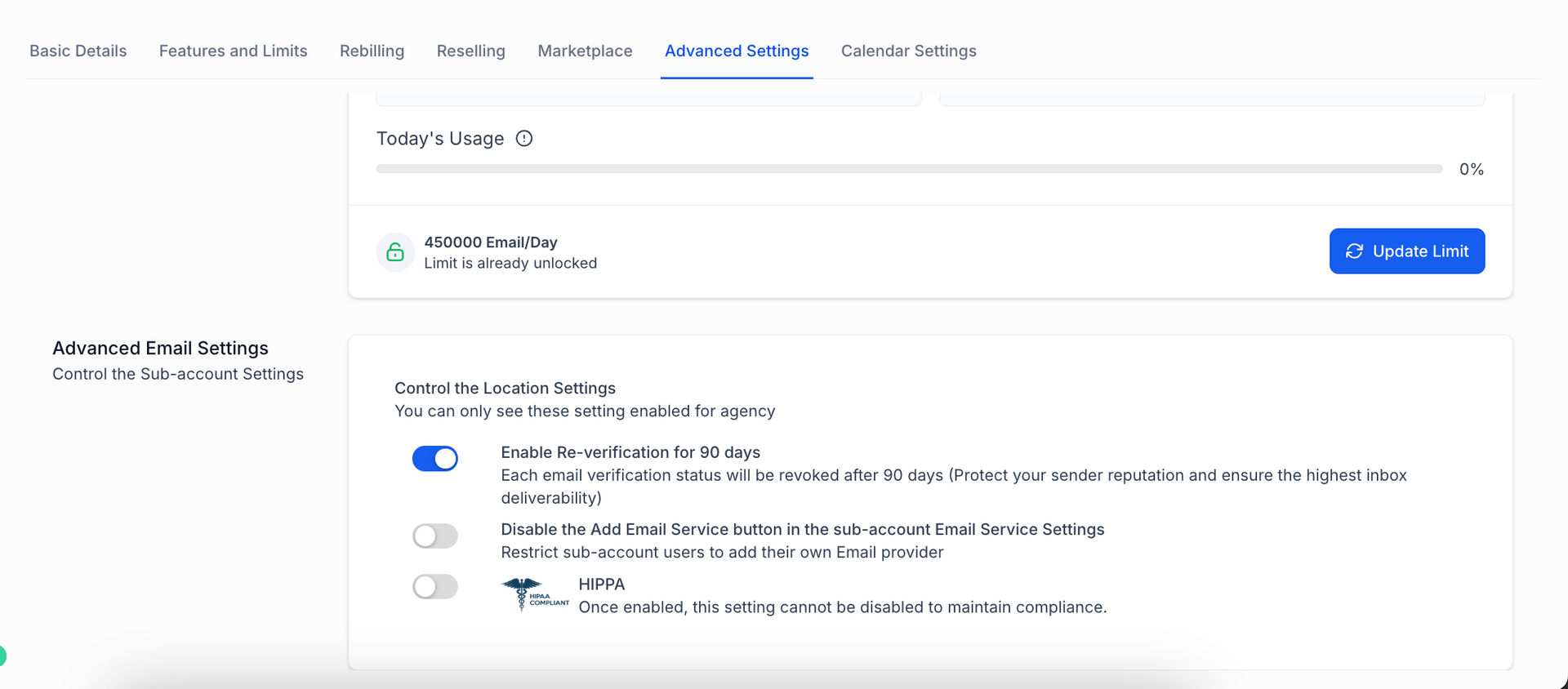
All contact forms, discovery call requests, and lead capture points on the website are connected directly to Go High Level , which is a HIPAA compliant CRM platform.
This means that when someone reaches out through your website, their information does not live in random inboxes or unsecured tools. It is routed into one protected system where you can manage communication, scheduling, and follow up safely.
Connecting discovery calls to your website without creating risk
When your meeting platform is integrated with a HIPAA compliant CRM, discovery calls can be booked directly through your website and tracked inside the same system that manages your leads and email communication.
This creates a clean, compliant workflow:
- Website inquiry
- Secure CRM capture
- Discovery call scheduling
- HIPAA compliant email follow up
No copying and pasting.
No missed messages.
No uncertainty about where information lives.
Why this matters for sustainable practice growth
HIPAA compliance should not feel like a constant mental load. When your website, CRM, and meeting platform are connected intentionally, your systems start working quietly in the background.
You spend less time managing tech.
Your clients experience a smoother process.
Your practice grows without adding chaos.
This is why I do not approach websites as standalone marketing tools. I design them as part of a complete, HIPAA compliant system that supports discovery calls, lead management, and email communication in one place.
When your systems are aligned, compliance feels easier. And ease is what allows your practice to grow without burnout.
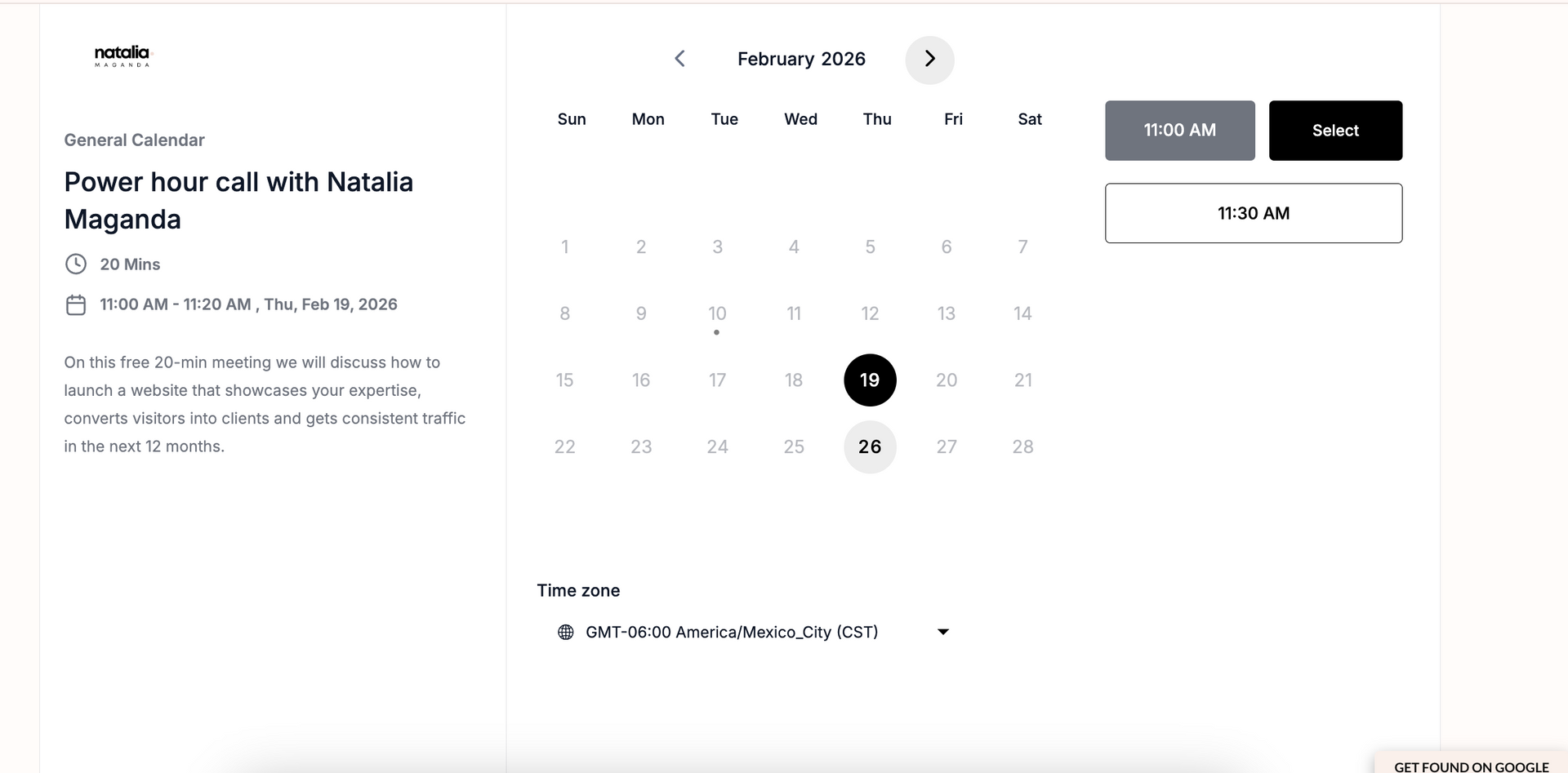
These type of calendars can be connected to Zoom and a HIPAA compliant CRM with your website
Ready to build a HIPAA compliant online presence that supports your practice and works while you rest
If compliance has started to feel heavy, it is often because the pieces were never designed to work together.
Through my website design and SEO services for private practice, I help therapists build HIPAA compliant websites that are not just informational, but operational. Your site becomes the system that connects secure scheduling, Zoom for Healthcare discovery calls, automated reminders, and protected client communication in one calm experience.
When your tools are integrated, your practice feels lighter. Your clients feel safer. And you are no longer carrying everything yourself.
Your website becomes more than a digital brochure.
It becomes the system that holds your practice steady, even when you are offline.
Related reads:
- Zoom for healthcare explainedand What I recommend for HIPAA compliance and website systems
- Is Google Meet HIPAA compliant?- What you need to know about your tech systems
- HIPAA compliant website for therapists- How to stay secure without overcomplicating your systems
- What to consider for SEO services for therapists
* AI Disclosure: This content may contain sections generated with AI with the purpose of providing you with condensed helpful and relevant content, however all personal opinions are 100% human made as well as the blog post structure, outline and key takeaways.
* Affiliate Disclosure: Some of the links on www.nataliamaganda.com may contain affiliate links meaning that I will get a commission for recommending products at no extra cost to you.

hello! i'm natalia maganda
The go-to website designer and SEO manager for therapists and private practice professionals that you didn't know existed
After designing 100+ websites for women in many industries, I ended up in the healing world because I believe in the power of emotional work and in supporting the people who support everyone else. Now, I’ve built an online presence that allows me to have more
time to spend with my family, more
income working with fewer clients and
less stress with sustainable marketing systems! And that’s exactly what I want for you. We manage 20+ websites and I’m ready for you to be the next one.