
Branding for Holistic Practitioners | NM Agency
Soft gradients, a cursive logo, and a stock photo of crystals: it is a recognizable look, and it belongs to roughly ten thousand other holistic practices at once. A visitor who already wants your exact modality still has to work to figure out whether you are the credible option or one more interchangeable wellness page.
Branding for holistic practitioners means building an identity specific enough to your actual training and modality that it reads as considered rather than templated, carrying real signals of credibility alongside the warmth the work is built on. The brand should convince someone before a single testimonial ever gets the chance to.
Below, we walk through where most holistic brands blend into the noise, and how a sharper identity carries into a website built to earn that trust and get found.
What branding for holistic practitioners actually means
For most industries, branding is about standing out from similar competitors. For holistic practitioners, the first job is different and comes before that one. A visitor has to decide the category itself is credible, that acupuncture, naturopathic medicine, energy work, or herbalism is a legitimate path worth their time and money, often within the same glance where they are also sizing up you. Branding here has to carry that weight first: visual choices, language, and structure that signal rigor, care, and real training, so the modality itself reads as trustworthy before a single service is explained.
Only once that foundation is set does branding get to do its second job, the one people usually think of first: explaining what makes your specific approach to acupuncture, naturopathy, energy work, or herbal medicine different from the practitioner down the street. Identity, message, and site have to hold both jobs at once, or the second one never gets heard.
Why most holistic practitioner brands undersell what they offer
- The trust gap gets ignored. Many sites explain treatment protocols in detail while skipping the more basic question a new visitor is actually asking, which is whether this whole field of work is legitimate and safe.
- DIY tools built something inconsistent. A logo from Canva, a color palette chosen by mood, and copy pieced together from different templates rarely agree with each other, and visitors notice the mismatch even when they cannot name it.
- New modalities got added without the brand catching up. A practitioner who started with acupuncture and later trained in herbalism or energy work often bolts the new offering onto an old site, and the brand starts to feel like a patchwork instead of one coherent practice.
- The language swings too mystical or too clinical. Some sites lean so far into abstract, ethereal language that a skeptical visitor cannot find anything concrete to hold onto, while others overcorrect into sterile, clinical wording that strips out the warmth this work is actually known for.
- Real client experience gets left out. Without language that reflects what actual sessions and outcomes feel like, a visitor is left to imagine what to expect, and imagination rarely lands in your favor.
These patterns show up constantly across the most common private practice website mistakes, and holistic practices carry a heavier version of nearly all of them.
Signs your brand isn't pulling its weight
- Would someone who has never heard of your modality understand, within seconds, what you actually do and why it is credible?
- Does your site explain your training and approach clearly enough that a first time visitor feels informed rather than confused?
- If you added a new modality or certification in the last year, does your brand actually reflect it, or is it mentioned almost as an afterthought?
- Do your visuals and your words feel like they came from the same practice, or like they were assembled from different templates at different times?
Who this is for
Strong fit if you:
- Are an acupuncturist, naturopath, energy healer, or herbalist ready to invest in a full website management engagement, with a brand refresh built in where needed.
- Know your current site is not earning the trust of visitors who are unfamiliar with your modality, even if you cannot fully articulate why.
- Have added training, certifications, or new modalities that your brand has not caught up to yet.
- Want a brand and a website that were designed together, not stitched together from separate projects over time.
May not be the best fit if you:
- Are looking to purchase branding as a standalone project without a new website management engagement, since a brand refresh is only offered bundled inside that engagement.
- Are not yet ready to hire ongoing website management and are only looking for a one time deliverable with no follow through.
- Want to keep your current site structure entirely as is and only swap out a logo, since a true trust rebuild touches messaging and structure as much as visuals.
How we approach branding for holistic practitioners
The work starts with understanding where trust is actually breaking down. That means looking closely at how a first time visitor, someone who may never have encountered your modality before, experiences your current site in the first several seconds. From there, the brand strategy focuses on translating your training, your approach, and your results into language and visuals that read as credible to someone outside the field, without losing the warmth that drew you to this work in the first place.
Visual identity gets built to hold both jobs branding has to do here, first establishing that the category itself is legitimate, then showing what makes your specific practice distinct. That might mean a more grounded color palette, typography that feels considered rather than decorative, and photography or imagery that supports rather than distracts from the message.
Messaging gets rebuilt around real client language wherever possible, so a visitor gets a concrete sense of what working with you actually feels like, instead of abstract claims they have no way to evaluate. This is where the mystical or overly clinical tone so common in this niche gets corrected into something that reads as both warm and credible.
All of this happens inside the same engagement as your new website build, not as a separate quote, a separate invoice, or a separate project timeline. Your brand and your site are designed, launched, and optimized for search together, because a visitor experiences them as one thing.
How it works:
Onboarding, strategy, copy, design, tech and foundational SEO
We start by learning your practice from the inside, your modality, your training, your ideal client, and the specific trust gap your current brand is not closing. From there we build out strategy, write copy grounded in how you actually talk to clients, design a visual identity to match, and lay the technical and SEO foundation your new site will stand on.
20+ page website launch with copy that reflects your depth and design that magnetizes your clients
Your site launches as a full, multi page presence, typically twenty pages or more, with copy that reflects the real depth of your training and a design system built to draw the right clients in rather than chase them down.
Transition to management. Review a blog batch. Approve it. Get back to your life. That is the whole assignment.
Once your site is live, we move into ongoing management. You review a batch of new content when it is ready, approve it, and return to running your practice. The heavy lifting of keeping your brand and search visibility current stays with us.
Meet your private practice website manager - Natalia Maganda

Natalia Maganda has built more than 100 websites and manages SEO for more than 30 therapy and wellness practices. She has spent almost a decade in this exact space, and her focus is specific: a brand identity and voice that actually match the practice you have grown into, not the one you started with. A website manager in your life, so marketing never becomes your full-time job again.
What this includes
- A visual identity, including logo, color palette, and typography suited to your modality and your specific practice.
- Messaging that translates your training and approach into language a first time visitor can trust.
- A cohesive brand system so your site, materials, and any future assets stay consistent as your practice grows.
- Real client language woven into your site to give visitors a concrete sense of what working with you feels like.
- A full website build with SEO built in from the foundation, not added afterward.
- Ongoing consistency review as part of management, so your brand does not quietly drift again over time.
- Reporting tied to search visibility and inquiries, not follower counts or vanity metrics.
What working together looks like
Working together starts with a strategy conversation about your practice, your training, and where you feel your current brand falls short, followed by a collaborative build where you review and approve work at each stage rather than being handed a finished product out of nowhere. Once your new site and brand are live, the relationship shifts into ongoing management, where you stay focused on your clients while search visibility, content, and brand consistency are handled on your behalf.
And if you want a closer look at the ongoing SEO behind all of this, see SEO for holistic practitioners.
Tips while you get started
- Before you touch visuals, get honest about whether your practice name itself communicates trust to someone new to your modality, which is worth working through in defining a name that attracts and connects.
- If you have been eyeing a DIY logo refresh in the meantime, at least ground it in something considered rather than trend driven, and these modern logo ideas are a reasonable place to look for direction.
- Photography carries more trust weight for this audience than most practitioners assume, so it is worth reviewing headshot and photoshoot ideas before your next session.
- If clients ever leave your space with a physical reminder of the visit, make sure it matches the same brand story with business card design ideas.

hello! i'm natalia maganda
The website manager for therapists and private practice you didn't know existed
We build and manage the 20+ page website that ranks in your city, reflects the depth of your work and books cash-pay clients with ease.
A done for you website management system that lets your practice grow without costing you your energy, your weekends, or your nervous system.
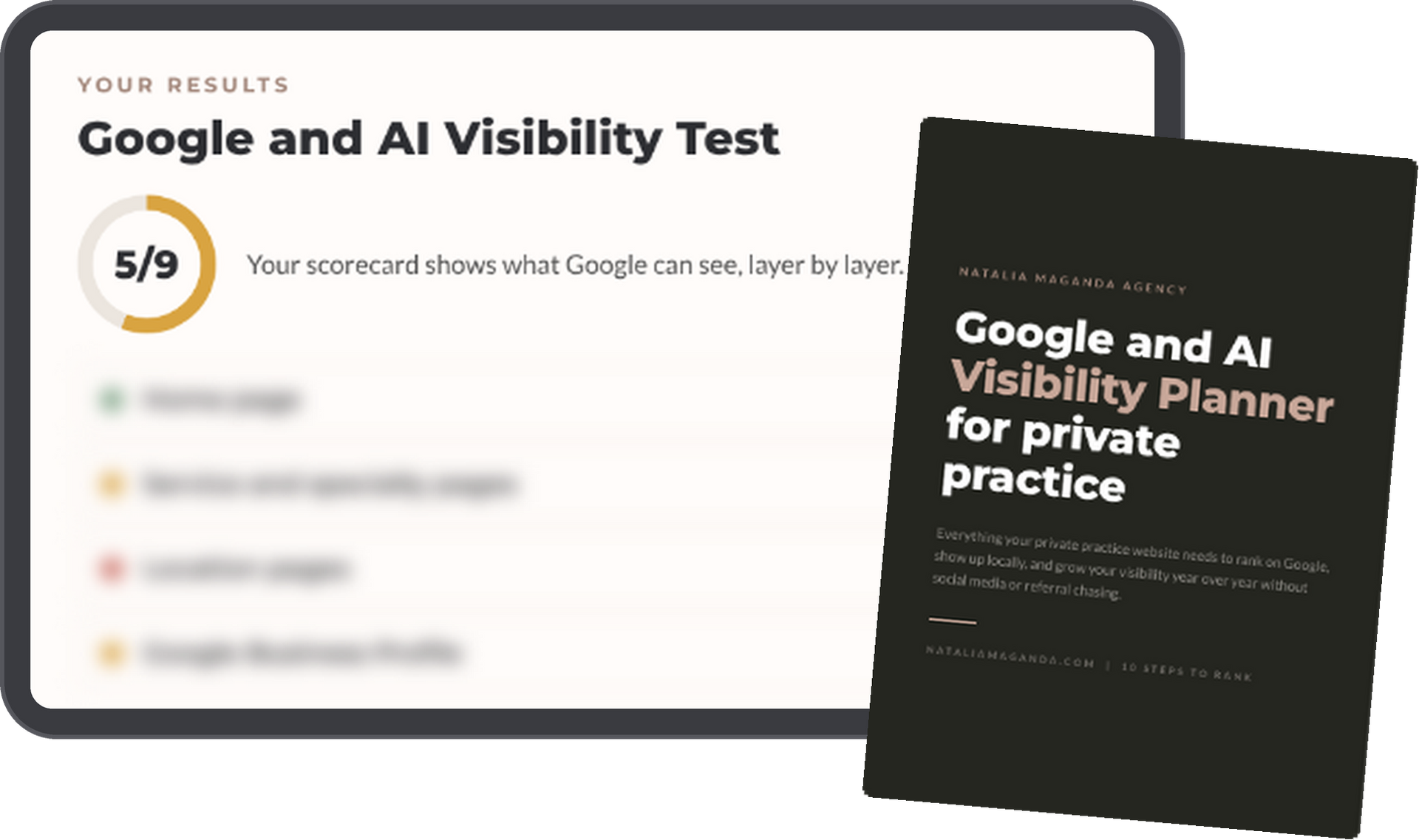
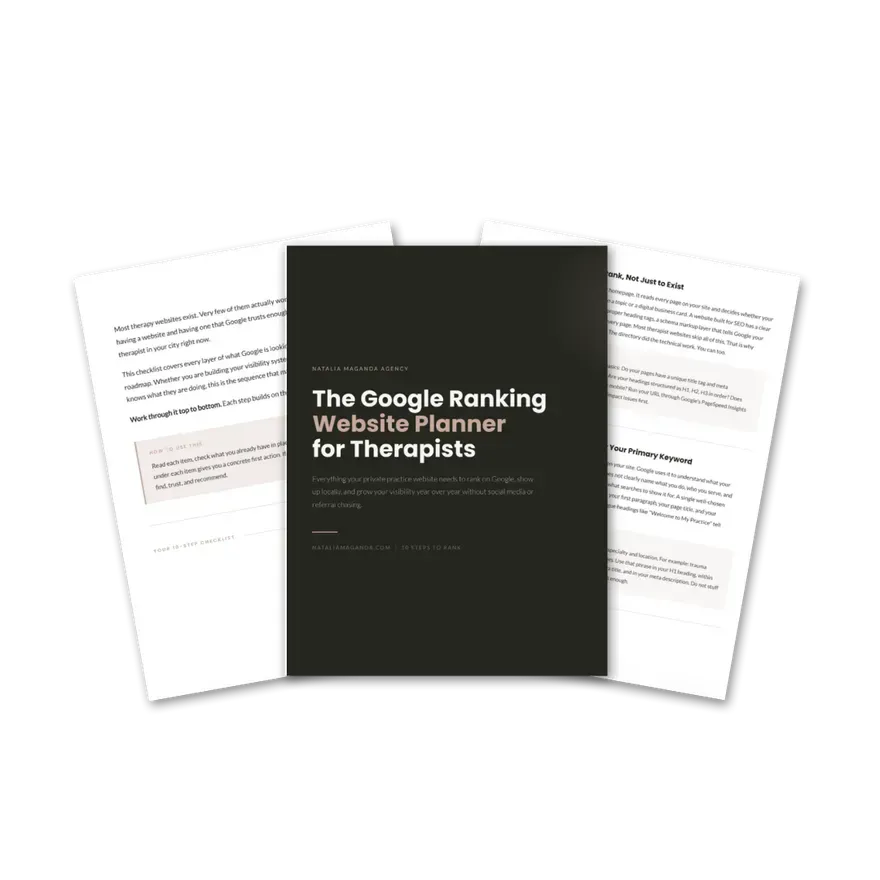
THE 10 THINGS NO ONE IS DOING FOR YOU RIGHT NOW
Your website exists. It is just not the one Google or AI shows when someone in your city searches at 11 at night.
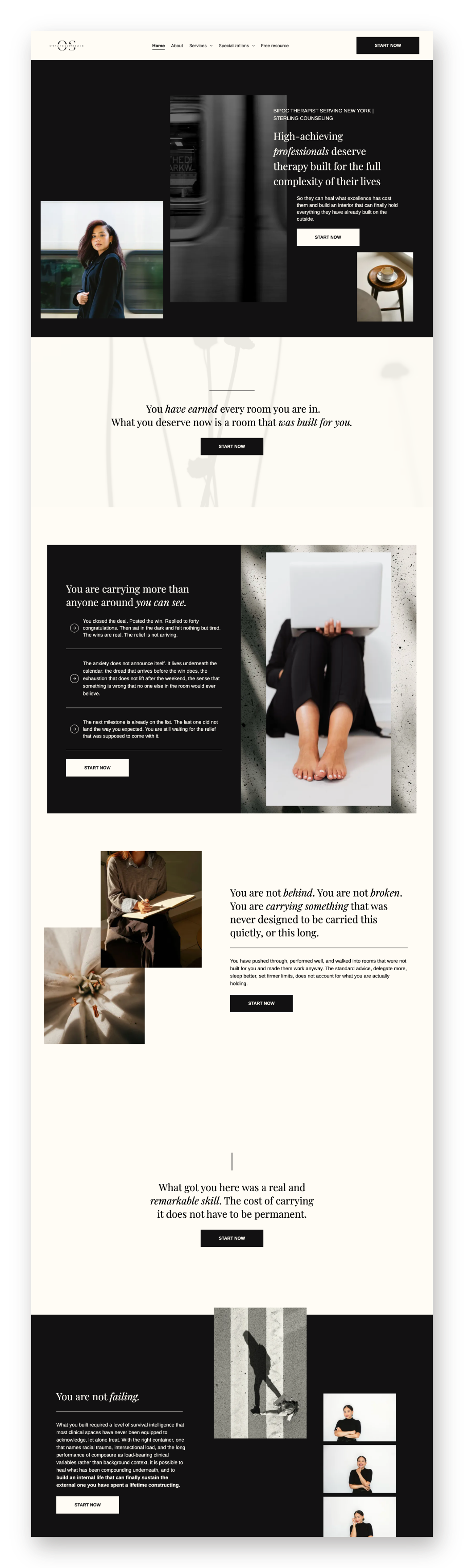
What your next 12 months can look like
One of these comes with a to do list. The other comes with a website manager.You become the web designer, copywriter and SEO
One monthly price. Everything handled.
$597/mo for 12 months, then $350/mo Year 1 price goes up in 2027Lock in current pricing


Client results we're obsessed with...
61 inquiries 27% from Google & AI year 1 of SEO
37 inquiries 51% from Google & AI year 2 of SEO
28 leads in 6 months with a 60+ page custom site re-launch
Multi state ranking & 100%+ traffic increase after 12 months of SEO
96 inquiries 35% from Google & AI + 532% traffic increase first 6 months of SEO (Squarespace re-launch)

For a limited time claim a custom 12-month private practice SEO roadmap by Natalia Maganda valued at
$97 for FREE
Tell me about your practice and I'll build you a custom PDF roadmap, your local keyword opportunities, a content batching rhythm, and quick wins specific to your niche and location. I build this by hand and walk you through it live on a 20-min call, and you keep the document either way.
We manage 30+ websites and we're ready for your practice to be the next one
Frequently Asked Questions
How much do brand identity designers charge?
We cannot answer that as its own number, because we do not offer branding as its own service. When your brand needs a refresh, it comes with a new website management engagement add-on.
Can I design my own logo with an AI tool?
You can, and plenty of practitioners do, but an AI tool has no way of knowing what specifically breaks trust for a visitor who has never encountered acupuncture, naturopathy, energy work, or herbalism before. It can generate something that looks polished in isolation while still missing the actual job your brand needs to do, which is convincing a skeptical newcomer that this entire category of care is worth trusting.
Does Canva own the logo I make on it?
Canva's terms allow you to use what you design there, but many of its templates and elements are shared across thousands of other accounts, so the usage rights can get murky depending on which assets you used and how. A custom identity avoids that ambiguity entirely, since it is built for your practice alone, with clear ownership from the start.
What is an example of a strong brand identity in wellness?
The strongest wellness brands are not the ones with the prettiest mood board, they are the ones where visuals, messaging, and the actual client experience all say the same thing. A visitor who sees the site, reads the language, books a session, and walks in the door should feel like they landed exactly where the brand told them they would. That alignment, more than any single design choice, is what makes an identity feel trustworthy.
Is rebranding risky once clients already know your name?
Some risk exists any time a familiar brand changes, but that risk drops considerably when your identity and your website launch together rather than in scattered, disconnected updates. Existing clients experience one clear transition instead of a confusing string of partial changes, and new visitors only ever see the finished, coherent version.
Ready to get this off your desk?
A brand refresh for holistic practitioners is never sold on its own here, it comes as part of a full website management engagement built around your new site, your visibility in your own city, and the trust a first time visitor needs to feel before they book. If you are ready to have that handled, apply for a strategy call.
Or if you want the fuller picture first, read more about what website management actually includes.