

Is Squarespace HIPAA Compliant? What Every Practice Owner Needs to Know
You are exceptional at what you do, guiding clients through transformation and holding space with remarkable depth. But when it comes to your website, you may wonder, does this really reflect the level of professionalism and care I offer?
For therapists, healers, and wellness providers, a website isn’t just a digital calling card. It’s an extension of your practiceone that must not only feel like an online home but also protect your clients’ most sensitive information.
If you’re asking, “Is Squarespace HIPAA compliant?” you’re ahead of the curve. As privacy regulations tighten and client expectations climb, knowing that your site is secure isn’t just best practice, it’s non-negotiable. This guide breaks down what compliance really means in plain English, exposes the most common myths about Squarespace, and shows what therapists need to look for to keep both client trust and peace of mind.
In case you are new here, I’m Natalia, and I support clinicians and practice owners through intuitive, strategic website design, optimized visibility, and luxury marketing systems. If you want to understand what a clear, confident online presence can do for your practice, explore our web design for therapists page. If you’re ready to be seen by more of the right-fit clients without burning out, discover our seo for therapists and Google ads for therapists solutions..
Is Squarespace HIPAA Compliant?
Squarespace is a widely loved website builder for therapists, coaches, and private practices. With its intuitive design and clean templates, it’s no surprise so many clinicians start their online journey there. But when it comes to safeguarding protected health information (PHI), does Squarespace deliver the deep security healthcare providers actually need?
Can You Make a HIPAA Compliant Website on Squarespace?
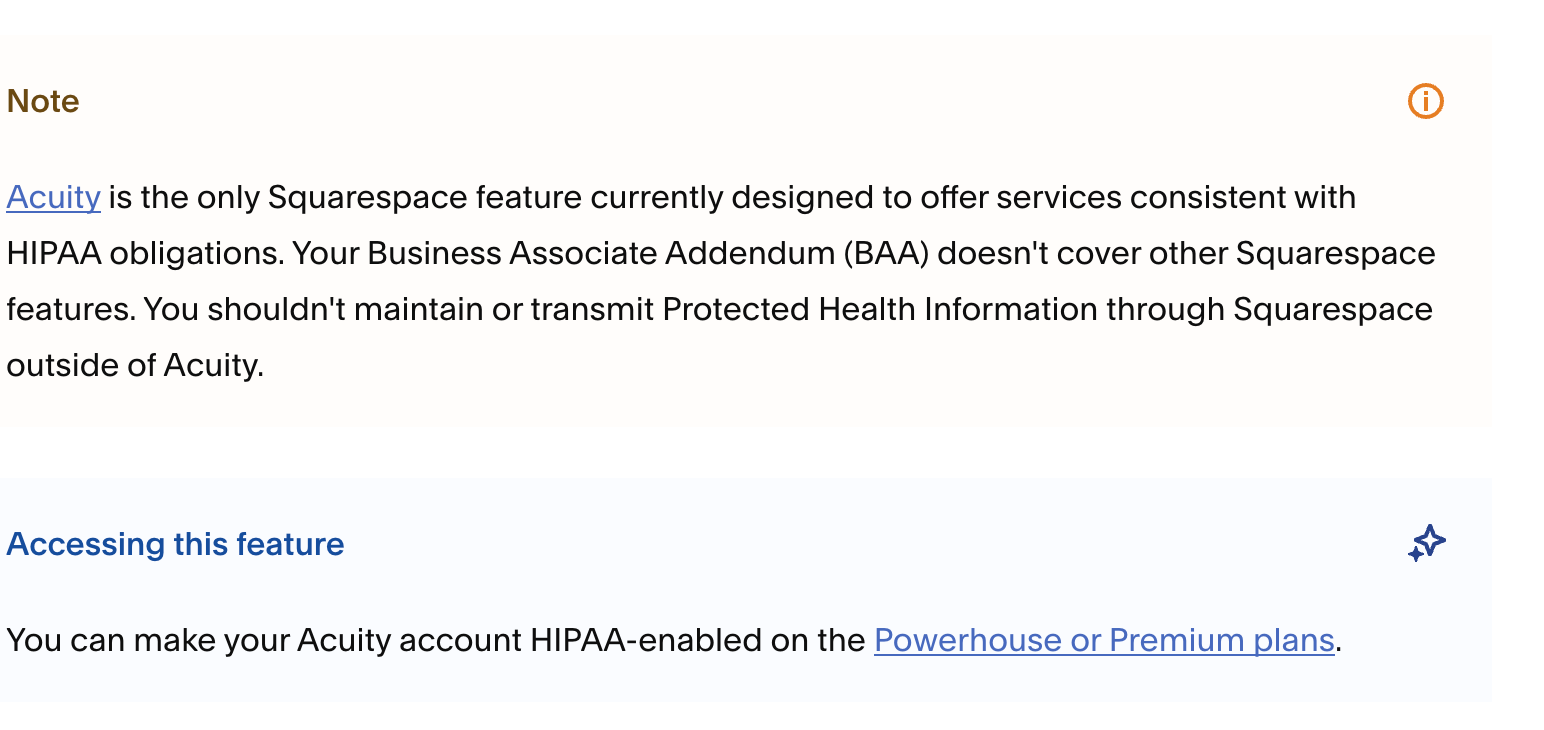
You might hope that modern website platforms are all up to speed on HIPAA, but the reality is different. Squarespace itself makes it clear: the platform is not designed for HIPAA compliance and will not sign a Business Associate Agreement (BAA), a key legal requirement for any technology holding or transmitting PHI.
In other words, even with their strong SSL security, Squarespace is not suitable for hosting, storing, or processing any client health information online.
Does Squarespace Sign a BAA (Business Associate Agreement)?
A BAA is an essential legal contract between your practice and any company that might have access to clients’ protected health data. This agreement is a must for HIPAA compliance. Squarespace publicly states in its help documentation and support responses that they
do not sign BAAs under any condition. This means you cannot use Squarespace to collect health forms, intake details, therapy notes, or any information that falls under HIPAA’s protections.
Reference here.
What Security Features Does Squarespace Provide for Healthcare Data?
Squarespace does maintain modern security best practices such as SSL encryption, PCI compliance for e-commerce, and general site-level protection. However, these measures do not fulfill HIPAA’s multi-layered protection requirements for patient data. Without a signed BAA and specific HIPAA technical protocols, Squarespace security is not sufficient for practices collecting or transmitting PHI.

What Are the Requirements for a HIPAA Compliant Website?
Before you can decide if any platform fits your needs, it helps to know what HIPAA compliance in the digital space looks like. HIPAA requires not just good intentions, but clear, technology-driven actions and documentation.
What Technologies or Tools Are Needed for HIPAA Compliance Online?
Compliant websites must ensure:
- Physical, technical, and administrative safeguards are in place
- Data is stored and transferred with strong encryption (beyond basic SSL)
- Login and data access controls are established
- Automatic activity logging is turned on for auditing
- Secure, HIPAA-vetted hosting
- Signed BAA between practice and any service provider
What Is a BAA and Why Is It Essential?
A Business Associate Agreement formally states that any company helping store, transmit, or process health data accepts legal responsibility for HIPAA compliance alongside your practice. Without a BAA, your practice alone is liable in case of a data breach.
What Regulations Apply to Healthcare Websites?
Alongside HIPAA, therapists and healthcare businesses must often comply with:
- HITECH Act
- State-level privacy laws
- GDPR (for European clients/patients)
- Relevant telehealth security requirements
If your website collects any health or personal data, via contact forms, scheduling, or client portals—HIPAA rules apply.
Best Website Builder for Therapists: What Should You Look For?
- A platform (or hosting provider) that offers:
- A signed BAA
- Customizable, secure web forms
- Documented HIPAA compliance measures
- 24/7 security monitoring and backups
- Optional: integrated video, scheduling, and EMR/EHR connections
How Can Therapists and Healthcare Businesses Create a HIPAA Compliant Website?
Even if you love Squarespace’s design, true compliance means using the right technology stack.
Are Web Forms on Squarespace HIPAA Compliant?
No. Never collect health history, diagnosis, insurance, or clinical information on Squarespace forms. To protect your practice, use a third-party, HIPAA-compliant form provider and link to it from your Squarespace site.
Do You Need Special Hosting for HIPAA Compliance?
Absolutely. HIPAA-compliant hosts go beyond basic security. They provide physical server protections, advanced data encryption, real-time monitoring, and most importantly—a signed BAA.
Examples:
- Atlantic.net (WordPress HIPAA hosting)
- Paubox Email Suite (for secure HIPAA email)
Can Squarespace Integrate with EMR (Electronic Medical Records) Systems?
Squarespace has no official integrations with clinical EMR/EHRs. Most practice management and EHR platforms (like SimplePractice, TherapyNotes, TheraNest) offer secure, compliant client portals. Your Squarespace site can *link* to these platforms for seamless client experience, but all protected data must be entered and stored *off Squarespace*.
Should Therapists Use Squarespace If They Need HIPAA Compliance?
Squarespace is a brilliant choice for therapists looking for a luxurious, low-maintenance marketing site—but not if you collect, store, or transmit PHI online. If you use Squarespace, your contact forms should ask non-private info only (ex: name, email, message). For all health data, direct clients to a secure, HIPAA-ready tool.
The right solution magnetizes your best-fit clients and protects their trust at every step. With the right setup, you can enjoy the aesthetic and brand power of Squarespace for marketing—while using secure partners for your clinical workflows.
Where Can You Get Support for Building a HIPAA Compliant Website?
Done being the “figure it out yourself” therapist?
Our agency specializes in designing luxurious, compliant websites that let you rest easy, without piecing together the tech stack solo. From web design for therapists to seo for therapists and google ads for therapists, we help you leave smallness, guesswork, and risk behind.
Ready for a website that reflects your expertise—and keeps your clients’ trust? Book a consultation today to step into a new era of ease, security, and visibility.
Related reads:
- Is Acuity HIPAA compliant?
- Is Calendly HIPAA compliant?
- Is Google Meet HIPAA compliant?
- Zoom for healthcare explained
- Is Zoom HIPAA compliant for private practice
- HIPAA compliant website for therapists
- What to consider for SEO services for therapist
* AI Disclosure: This content may contain sections generated with AI with the purpose of providing you with condensed helpful and relevant content, however all personal opinions are 100% human made as well as the blog post structure, outline and key takeaways.
* Affiliate Disclosure: Some of the links on www.nataliamaganda.com may contain affiliate links meaning that I will get a commission for recommending products at no extra cost to you.

hello! i'm natalia maganda
The website manager for therapists and private practices that you didn't know existed.
We build and manage the 20+ page website that ranks in your city, reflects the depth of your work and books cash-pay clients with ease.
A done for you website management system that lets your practice grow without costing you your energy, your weekends, or your nervous system.